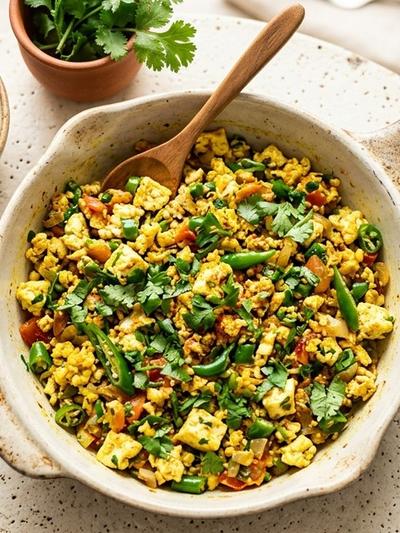
Imagine soft, creamy scrambled eggs folded with golden-seared paneer cubes, swimming in saffron-infused butter with the intoxicating crackle of curry leaves perfuming every bite. This Paneer Akuri takes the beloved Parsi breakfast scramble — traditionally richer and silkier than its North Indian bhurji cousin — and elevates it with warm saffron, a touch of cream, and generous chunks of pan-fried paneer. The result is luxuriously soft curds with pockets of chewy, golden cheese that melt into morning perfection.
With 52 grams of fat and only 5 grams of net carbs per generous serving, this breakfast hits keto macros effortlessly. The paneer and eggs together deliver 30 grams of protein, while the saffron butter and cream push the fat ratio well above 70% of calories. No hidden starches, no flour fillers — just pure, satisfying fat-fueled energy to start your day.
Best of all, everything happens in a single skillet in under 17 minutes. There is no marinating, no oven preheating, and cleanup is a breeze. This is the kind of weekday morning meal that feels indulgent but requires barely more effort than regular scrambled eggs.
Ingredients (serves 2)
For the saffron butter:
- 2 tablespoons (28g) unsalted butter
- 1 generous pinch saffron threads (about 15 strands)
- 8–10 fresh curry leaves
For the skillet:
- 7 oz (200g) paneer, cut into ½-inch cubes
- 1 tablespoon (15ml) ghee or avocado oil
- 2 tablespoons (20g) finely diced red onion
- 1 small green chili, finely sliced (seeds removed for less heat)
- ½ teaspoon cumin seeds
- ¼ teaspoon ground turmeric
- ¼ teaspoon Kashmiri red chili powder
- 4 large eggs
- 2 tablespoons (30ml) heavy cream
- Salt to taste
For garnish:
- 1 tablespoon fresh cilantro, roughly chopped
- Freshly cracked black pepper
- Extra saffron butter drizzled on top
Instructions
Bloom the saffron butter. Place the butter in a small bowl and microwave for 15 seconds until just melted (or melt in the corner of your skillet). Crumble the saffron threads into the warm butter and stir. Set aside to bloom while you prep — the butter will turn a gorgeous gold within 2–3 minutes.
Crisp the paneer. Heat the ghee in a 10-inch nonstick or well-seasoned cast-iron skillet over medium-high heat. Add the paneer cubes in a single layer. Cook undisturbed for 2 minutes until the bottom turns golden, then flip and sear the second side for another 1–2 minutes. Remove the paneer to a plate.
Fry the curry leaves and aromatics. Reduce heat to medium. Add half the saffron butter to the same skillet. Once it foams, toss in the curry leaves — they will sputter and crisp in about 20 seconds. Immediately add cumin seeds and let them crackle for 10 seconds. Add the diced red onion and green chili, stirring for 1 minute until the onion softens slightly.
Add the spices. Sprinkle in the turmeric and Kashmiri chili powder, stirring for 15 seconds until fragrant. The residual fat in the pan will bloom the spices beautifully.
Scramble the eggs akuri-style. In a small bowl, whisk the eggs with the heavy cream and a pinch of salt until just combined — do not over-beat. Pour the egg mixture into the skillet over the spiced onion base. Let it sit undisturbed for 20 seconds until the edges begin to set, then use a silicone spatula to gently push large curds from the edges toward the center. Continue folding slowly — the key to akuri is large, soft, barely-set curds. This should take about 90 seconds total.
Fold in the paneer. When the eggs are still slightly underdone (they will carry-over cook), gently fold in the seared paneer cubes. The residual heat will finish setting the eggs while the paneer warms through. Remove the skillet from heat immediately.
Finish and serve. Drizzle the remaining saffron butter over the top, scatter with fresh cilantro, and crack black pepper generously over everything. Serve straight from the skillet while the curds are still glossy and soft.
Nutrition per Serving
| Nutrient | Amount |
|---|---|
| Calories | ~608 kcal |
| Fat | ~52g |
| Protein | ~30g |
| Total Carbs | ~7g |
| Fiber | ~2g |
| Net Carbs | ~5g |
Nutrition is approximate and based on the stated ingredients using standard USDA and brand data for paneer.
Tips & Variations
Keep the curds soft and silky. The magic of akuri versus regular bhurji is texture — you want large, pillowy curds rather than dry crumbles. Pull the skillet off the heat while the eggs still look slightly wet. They will continue cooking from residual heat for another 30 seconds. If you prefer firmer eggs, simply leave them on heat 30 seconds longer, but traditional akuri should wobble.
Use full-fat paneer only. Low-fat paneer will not sear properly and has a rubbery texture. Look for paneer with at least 20g fat per 100g on the label. If making paneer at home, use whole milk and heavy cream for the richest result. Homemade paneer also crumbles more easily, which works beautifully folded into the eggs.
Watch your onion quantity for keto. Red onion adds a pleasant sweetness, but onions carry about 7g net carbs per 100g. The 20g called for here adds barely 1.4g net carbs total, split across two servings. If you are strict about carbs, reduce to 1 tablespoon or omit entirely — the dish is still excellent without it.
Substitute dairy-free saffron oil if needed. For those avoiding butter, melt coconut oil and bloom the saffron in it instead. The flavor profile shifts slightly toward South Indian, which pairs equally well with curry leaves. Ghee is another excellent option that keeps this lactose-friendly while maintaining rich flavor.
Meal prep the components ahead. You can pre-sear paneer cubes and store them refrigerated for up to 3 days. You can also pre-bloom the saffron butter and keep it covered at room temperature overnight. In the morning, the entire cook comes together in under 8 minutes — just reheat the paneer in the skillet and scramble the eggs fresh.