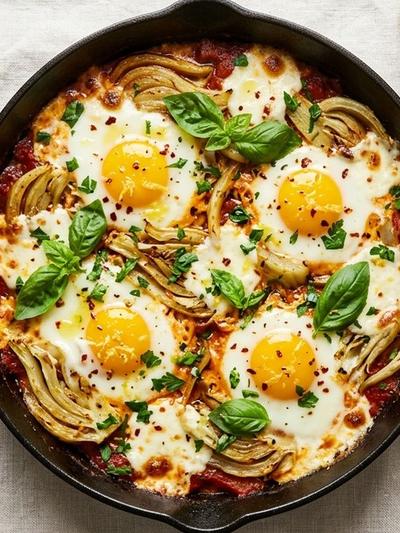
Okonomiyaki is one of Japan's most beloved street foods — a thick, savory pancake loaded with shredded cabbage and drizzled with creamy mayo. This keto version reimagines it as a fluffy, golden omelette cooked entirely in one skillet, swapping the flour batter for beaten eggs and adding pockets of melted mozzarella that stretch with every forkful. The toasted sesame oil perfumes the entire kitchen while the cabbage turns tender and sweet against the crispy, golden bottom of the eggs. Finished with zigzag lines of tangy sesame-mayo and a scatter of toasted seeds and nori, it looks and tastes like something from an Osaka street stall — except it's on your breakfast table in under 25 minutes.
Each generous serving delivers 52 grams of fat from butter, sesame oil, mozzarella, and rich Kewpie mayo, keeping you firmly in ketosis with just 5 grams of net carbs. The five eggs bring 24 grams of protein to the plate, making this a fully satisfying meal that holds you through lunch without a single hunger pang. Fat accounts for over 80 percent of the calories here — exactly where a well-formulated ketogenic breakfast should land.
The beauty of this recipe goes beyond flavor. Everything happens in a single skillet: you mix the batter, pour it in, cook it on the stovetop, and finish it under the broiler. No second pan, no baking dish, no extra bowls to scrub. It comes together in 22 minutes start to finish, and the leftover half reheats beautifully in a dry skillet the next morning.
Ingredients (serves 2)
For the omelette:
- 5 large eggs
- 1½ cups (105g) shredded green cabbage, packed
- ½ cup (56g) shredded mozzarella cheese
- 2 scallions, thinly sliced (white and green parts separated)
- 1 tablespoon (15ml) tamari or soy sauce
- ¼ teaspoon ground ginger
For cooking:
- 2 tablespoons (28g) unsalted butter
- 1 tablespoon (15ml) toasted sesame oil
For the sesame-mayo drizzle:
- 2 tablespoons (30g) Japanese Kewpie mayonnaise or regular full-fat mayo
- ½ teaspoon toasted sesame oil
- 1 teaspoon rice vinegar
For topping:
- 1 tablespoon toasted sesame seeds
- 2–3 nori sheets, cut into thin strips
- Reserved scallion greens
- Pinch of gochugaru or a drizzle of sriracha (optional, for heat)
Instructions
Make the batter. Crack the eggs into a large bowl and add the tamari and ground ginger. Beat with a fork until the yolks and whites are fully combined and the mixture is slightly frothy. Fold in the shredded cabbage, scallion whites, and mozzarella until everything is evenly distributed. The batter will look heavy on vegetables — that is exactly right. Set aside while you heat the pan.
Heat the skillet. Place a 10-inch (25cm) oven-safe skillet over medium heat. Add the butter and sesame oil. Swirl the pan as the butter melts and foams, letting the toasted sesame scent bloom, about 1 minute. Make sure the fat coats the entire bottom and edges of the skillet — this is what creates the irresistible golden crust.
Cook the base. Pour the egg-cabbage mixture into the hot skillet and spread it into an even layer with a spatula, pressing gently so it sits about ¾ inch (2cm) thick. Reduce the heat to medium-low and cover tightly with a lid or sheet of aluminum foil.
Set the bottom. Cook undisturbed for 6–7 minutes. The omelette is ready to move on when the bottom is deeply golden brown (lift one edge carefully with a spatula to check), the edges look set and slightly dry, and the center is still a bit wet on top. Resist the urge to poke or move it — patience builds that crispy crust.
Broil the top. While the omelette cooks, position an oven rack about 6 inches (15cm) from the broiler element and preheat the broiler to high. When the bottom of the omelette is golden, remove the lid and transfer the skillet directly under the broiler. Broil for 2–3 minutes until the top is puffed, golden in spots, and the mozzarella is bubbly and lightly browned. Watch it closely — broilers work fast and the difference between perfect and charred is about 30 seconds.
Make the drizzle. While the omelette broils, whisk together the Kewpie mayo, sesame oil, and rice vinegar in a small bowl until smooth. If you want to make the drizzle easy to apply in thin lines, spoon it into a small zip-top bag and snip off one tiny corner, or use a squeeze bottle.
Rest and garnish. Remove the skillet from the broiler and let the omelette rest for 2 full minutes — this sets the eggs completely from residual heat and makes cutting cleaner. Drizzle the sesame-mayo across the surface in zigzag lines (the classic okonomiyaki pattern). Scatter the toasted sesame seeds, nori strips, and reserved scallion greens over the top. Add a pinch of gochugaru or a thread of sriracha if you like heat.
Serve. Cut the omelette in half right in the skillet and slide each piece onto a plate using a wide spatula. Serve immediately while the cheese is still stretchy and the bottom is still crackling.
Nutrition per Serving
| Nutrient | Amount |
|---|---|
| Calories | ~580 kcal |
| Fat | ~52g |
| Protein | ~24g |
| Total Carbs | ~7g |
| Fiber | ~2g |
| Net Carbs | ~5g |
Approximate values based on the stated ingredients. Actual numbers may vary by brand, particularly for mayonnaise and tamari.
Tips & Variations
Use an oven-safe skillet or try the plate-flip method. If your skillet handle is not broiler-safe, skip the broiler entirely. Instead, slide the omelette onto a large flat plate, place the skillet upside down over it, and flip both together in one confident motion. Return to medium heat and cook the second side for 2–3 minutes until golden. This traditional technique works well once you commit to the flip — hesitation is the only thing that causes mess.
Check your mayo for hidden sugars. Japanese Kewpie mayo is made with egg yolks only, giving it a richer and tangier flavor than American-style mayo, and it is naturally very low in carbs (about 0.1g per tablespoon). Some store brands, however, sneak in sugar, corn syrup, or modified starch. Always read the label. Avocado oil mayo is another excellent zero-sugar option that keeps things clean.
Salt the cabbage if it is very wet. Some cabbages release more moisture than others, and excess water makes for a soggy omelette. If your shredded cabbage looks particularly juicy, toss it with a pinch of salt and let it sit in a colander for 5 minutes. Squeeze it firmly in a clean kitchen towel before folding it into the egg mixture. This step is optional but makes a noticeable difference.
Switch up the cheese for variety. Mozzarella gives that stretchy, gooey pull that mirrors traditional okonomiyaki texture, but sharp cheddar, Gruyère, or smoked Gouda all work and each push the flavor in a different direction. Stick to semi-hard cheeses that melt well — soft cheeses like brie or fresh goat cheese will not hold together during cooking.
Scale up for meal prep. Double the recipe and cook it in a 12-inch (30cm) skillet for a thicker omelette that serves four. Cut into wedges and store in airtight containers in the refrigerator for up to two days. Pack the sesame-mayo drizzle separately to keep the surface from getting soggy. Reheat each wedge in a dry skillet over medium heat for 3–4 minutes per side until warmed through and crispy again — the microwave turns it rubbery, so avoid it.