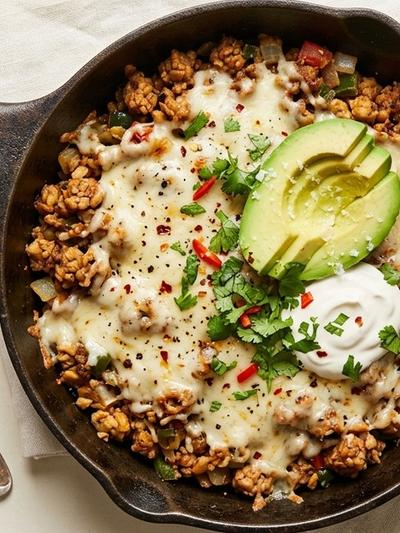
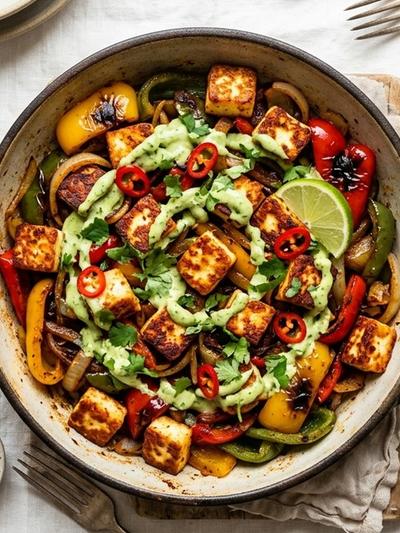
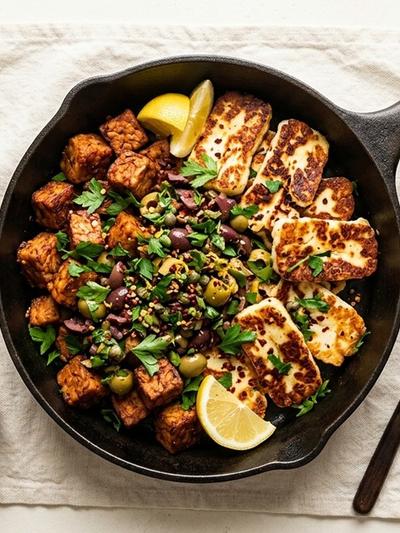
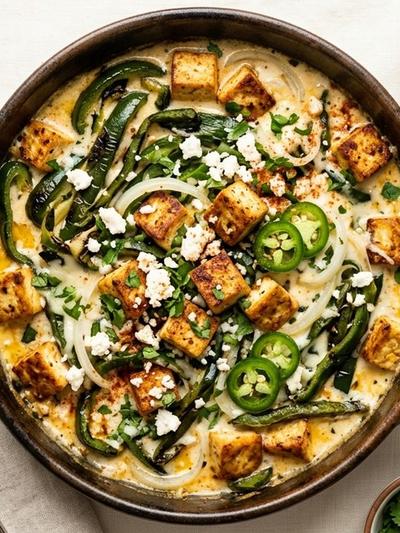
Calabacitas is one of the most beloved home-cooked dishes in Mexican kitchens, a simple sauté of tender zucchini with roasted peppers, aromatics, and cheese that somehow becomes far more than the sum of its parts. This keto version swaps the traditional corn kernels for a rich pour of coconut cream that turns the vegetable juices into a silky, cumin-scented sauce. Soft-scrambled eggs get folded in at the end while pepper jack melts across the top, and a shower of toasted coconut adds the kind of nutty crunch you never knew calabacitas needed. It is comfort food at its most direct, ready in twenty-five minutes with nothing to wash but a single skillet.
The macro profile here is built for ketogenic eating without any tricks. Coconut cream and coconut oil provide the bulk of the fat, backed up by eggs, cheese, and avocado for a total of 47 grams of fat per serving. Protein lands at a solid 25 grams from the eggs and two cheeses, while net carbs stay at just 7 grams thanks to naturally low-carb zucchini and poblano pepper. Fat accounts for roughly 75 percent of total calories, which is right where a well-formulated keto lunch should sit.
This is a weekday lunch that comes together fast enough to cook between meetings and packs well in a glass container for the office. The coconut cream sauce actually improves as it sits, soaking into the zucchini and carrying the cumin deeper into every bite. If you meal-prep four portions on Sunday, you have lunches through Wednesday that reheat in two minutes flat. Serve it straight from the skillet at home or spoon it over a handful of greens if you want extra volume without extra carbs.
Ingredients (serves 4)
For the calabacitas:
- 2 tablespoons (28g) coconut oil
- 2 medium zucchini (about 14 oz / 400g total), cut into 1/2-inch (1.25cm) dice
- 1 medium poblano pepper, seeded and diced
- 1 jalapeño, seeded and minced (leave seeds for more heat)
- 2 tablespoons (20g) finely diced white onion
- 2 cloves garlic, minced
- 1 teaspoon ground cumin
- 1/2 teaspoon dried Mexican oregano (or regular oregano)
- 3/4 cup (180ml) full-fat coconut cream
- 1/2 teaspoon fine sea salt, plus more to taste
- 1/4 teaspoon freshly ground black pepper
For the eggs and cheese:
- 8 large eggs, lightly beaten
- 4 oz (113g) pepper jack cheese, shredded
- 2 oz (57g) cotija cheese, crumbled
For serving:
- 1 large ripe avocado, sliced
- 3 tablespoons (15g) unsweetened shredded coconut, toasted
- Fresh cilantro leaves
- 1 lime, cut into wedges
Instructions
Toast the coconut. Set a large (12-inch / 30cm) skillet over medium heat. Add the shredded coconut and stir constantly for 2 to 3 minutes until golden and fragrant. Transfer to a small bowl and set aside. Wipe the skillet clean.
Sauté the vegetables. Return the skillet to medium-high heat and add the coconut oil. Once the oil shimmers, add the diced zucchini, poblano, and jalapeño. Cook without stirring for 2 minutes to let the zucchini pick up light golden color on the bottom, then toss and cook for another 2 to 3 minutes until the vegetables are just tender but still have bite. Add the diced onion and garlic, stir for 30 seconds until fragrant.
Build the sauce. Sprinkle the cumin and oregano over the vegetables and stir for 15 seconds to bloom the spices. Pour in the coconut cream, season with salt and pepper, and stir to combine. Let the sauce simmer gently for 2 to 3 minutes until it thickens slightly and coats the back of a spoon. The zucchini will release some liquid into the coconut cream, creating a cohesive, lightly thickened sauce.
Add the eggs. Reduce the heat to medium-low. Pour the beaten eggs evenly over the vegetables. Let them sit undisturbed for about 30 seconds until the edges just begin to set, then use a spatula to gently fold the eggs through the vegetables in large, slow strokes. Continue folding every 15 to 20 seconds for about 2 minutes. You want soft, creamy curds interspersed with the saucy vegetables, not a scrambled-egg mess.
Melt the cheese. Scatter the shredded pepper jack evenly over the top of the skillet. Cover with a lid (or a sheet of aluminum foil) and let sit on the lowest heat for 1 to 2 minutes until the cheese is fully melted and bubbly at the edges.
Finish and serve. Remove from heat. Crumble the cotija cheese over the top, then add sliced avocado, toasted coconut, torn cilantro leaves, and a generous squeeze of lime. Serve directly from the skillet.
Nutrition per Serving
| Nutrient | Amount |
|---|---|
| Calories | ~565 kcal |
| Fat | ~47g |
| Protein | ~25g |
| Total Carbs | ~12g |
| Fiber | ~5g |
| Net Carbs | ~7g |
Nutrition values are approximate and based on the stated ingredients and serving size of 4.
Tips & Variations
Do not overcook the zucchini. Calabacitas lives or dies by the texture of the squash. You want pieces that are tender enough to absorb the coconut cream sauce but still hold their shape. If you cook them to mush, the dish becomes watery and loses the satisfying contrast between soft eggs and firm vegetables. Keep the heat at medium-high and resist the urge to stir constantly during the initial sear.
Choose your coconut cream carefully. Not all canned coconut products are equal for keto. Full-fat coconut cream typically has 1 to 2 grams of carbs per quarter cup, but some brands add sugar or thickeners that push it higher. Check the label and look for cans that list only coconut extract and water. Avoid "lite" or "light" coconut milk, which replaces fat with fillers and gives a thin, watery sauce.
Make it ahead for meal prep. Let the finished calabacitas cool completely, then divide into four airtight containers. The avocado and toasted coconut should be stored separately and added fresh when you eat. Refrigerated, the base keeps well for 3 to 4 days. Reheat in a microwave for 90 seconds or in a skillet over medium-low heat for 3 to 4 minutes, adding a splash of water if the sauce has tightened up overnight.
Swap the protein to match what you have. Halloumi cut into cubes and seared before building the sauce gives you a chewier, saltier result. Cubed paneer works beautifully too and soaks up the coconut cream sauce. If you prefer tofu, press it well, cube it, and brown it in the coconut oil before adding the zucchini. All of these swaps keep the macros in keto range, though you may need to adjust the salt since halloumi and cotija are already quite salty.
Use the right pepper for your heat level. The poblano provides smoky depth without much burn, while the jalapeño brings the sharper heat. For a milder version, skip the jalapeño entirely and add a pinch of smoked paprika instead. For more fire, leave the jalapeño seeds in or add a small serrano chile. Either way, the coconut cream tempers the capsaicin significantly, so you can push the heat a notch higher than you normally would.