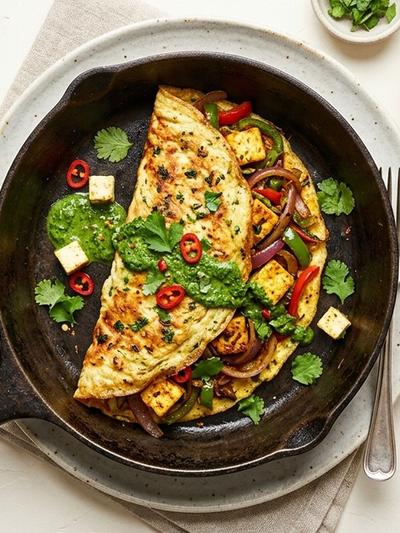
Traditional dosa batter is made from fermented rice and urad dal, which means carbs galore. This keto version uses almond flour and eggs to create a batter that crisps up beautifully in a hot pan, giving you that signature golden, lacy texture without any grains at all. At just 4g net carbs per serving, you can enjoy two dosas with a generous side of fresh coconut chutney and stay comfortably within your daily carb budget. The batter comes together in minutes — no overnight fermentation needed — and the dosas cook in about 2 minutes each. Paired with the cool, aromatic coconut chutney, this is Indian comfort food that fits right into a vegetarian keto lifestyle. If you're craving something savoury and satisfying for breakfast, this recipe delivers.
Why This Works on Keto
Almond flour is one of the best grain-free alternatives for Indian flatbreads. It's high in healthy fats, moderate in protein, and very low in net carbs. Adding eggs to the batter serves double duty — they provide structure (replacing the binding that fermented dal would give) and boost the protein content. The coconut chutney adds healthy fats from fresh coconut and keeps the overall carb count low.
Ingredients
For the dosa batter:
- 100g almond flour (fine, blanched)
- 2 large eggs
- 120ml water
- 1/2 tsp salt
- 1/4 tsp ground cumin
- 1/4 tsp ground turmeric
- Pinch of asafoetida (hing) — optional but authentic
- Coconut oil or ghee for cooking
For the coconut chutney:
- 80g fresh or frozen grated coconut (unsweetened)
- 1 green chilli, roughly chopped (adjust to taste)
- 1cm piece fresh ginger, peeled and sliced
- 10g roasted chana dal (optional, adds ~1g carb)
- 60ml water
- 1/2 tsp salt
- Juice of 1/2 lime
For the chutney tempering:
- 1 tsp coconut oil
- 1/2 tsp mustard seeds
- 5-6 curry leaves
- 1 dried red chilli, broken in half
Instructions
- Make the chutney first: Add the grated coconut, green chilli, ginger, roasted chana dal (if using), water, salt, and lime juice to a blender. Blend until you get a smooth but slightly textured paste. Transfer to a bowl.
- Temper the chutney: Heat 1 tsp coconut oil in a tiny pan over medium heat. Add the mustard seeds and wait for them to pop. Add the curry leaves and dried red chilli, let them sizzle for 10 seconds, then pour the entire tempering over the chutney. Stir to combine and set aside.
- Make the dosa batter: In a mixing bowl, whisk together the almond flour, eggs, water, salt, cumin, turmeric, and asafoetida until you have a smooth, thin batter. It should be thinner than pancake batter — closer to a crepe batter consistency. Add a splash more water if needed.
- Heat a large non-stick skillet or flat tawa over medium-high heat. Add about 1/2 tsp of coconut oil and spread it around with a paper towel.
- Pour about 60ml (roughly 1/4 cup) of batter into the centre of the pan. Quickly tilt and swirl the pan to spread the batter into a thin, even circle about 18-20cm in diameter. If the batter is too thick to spread, add a tablespoon of water to the batter.
- Cook for 2-3 minutes without touching it. You'll see the edges start to lift and turn golden brown, and small holes will form on the surface.
- Drizzle a tiny bit of oil around the edges. When the bottom is deep golden and crisp, carefully flip and cook for another 30-45 seconds. The second side won't get as crispy, and that's fine.
- Transfer to a plate and repeat with the remaining batter. You should get about 8 dosas total (2 per serving).
- Serve the dosas hot with the coconut chutney on the side.
Tips & Variations
The pan temperature is crucial — if it's too cool, the dosa will be soft and floppy; too hot and it'll burn before the centre cooks. Medium-high is the sweet spot, but you may need to adjust based on your stove. For an even crispier dosa, sprinkle a tiny amount of sesame seeds onto the batter right after pouring it into the pan. You can also fill these with a spiced cauliflower potato filling (using cauliflower instead of potato to keep it keto) for a masala dosa experience. The batter keeps in the fridge for up to 2 days.