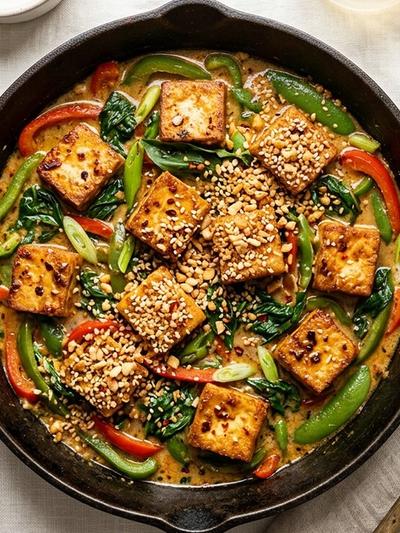
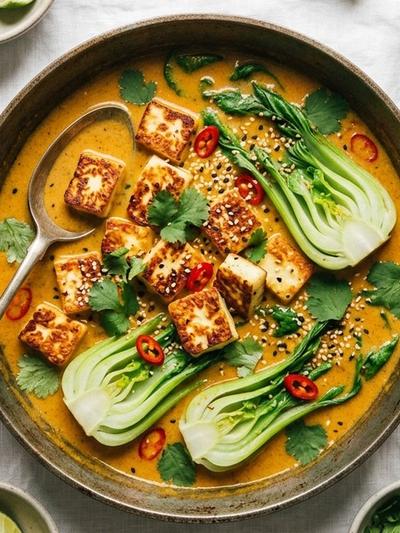
This laksa hits you with the kind of fragrant, coconut-drenched warmth that makes you forget you are eating low-carb. A turmeric-gold broth simmered with lemongrass, ginger, and white miso wraps around tender zucchini noodles and slippery bok choy, while cubes of pan-seared tofu float on top with just enough crust left to shatter between your teeth. It tastes like something from a hawker stall in Penang, except you made it in one pot on a Tuesday.
Each bowl delivers roughly 35 grams of fat, mostly from full-fat coconut cream and the coconut oil used to sear the tofu. Protein lands at 13 grams per serving, and net carbs sit at a comfortable 8 grams. That puts the fat ratio at about 73 percent of total calories, right in the sweet spot for staying in ketosis without supplementing extra oil or fat bombs on the side.
The whole thing comes together in under 30 minutes with a single pot and minimal prep. Zucchini noodles stand in for rice vermicelli, bok choy wilts right into the broth, and the tofu sears in the same pot before the soup builds on top of those browned bits. Pack the broth and toppings separately and you have a reheatable workday lunch that actually tastes better the next day.
Ingredients (serves 4)
For the golden tofu:
- 1 block (16 oz / 450g) extra-firm tofu, pressed and cut into ¾-inch cubes
- 2 tbsp (30ml) coconut oil
- Pinch of fine sea salt
For the laksa broth:
- 1 small shallot, finely diced
- 3 cloves garlic, minced
- 1 tbsp (6g) fresh ginger, grated
- 1 stalk lemongrass, outer layers removed, tender part minced
- 2 fresh red chilies, thinly sliced (adjust to taste)
- 1 tsp ground turmeric
- 1 tsp ground coriander
- ¼ tsp ground white pepper
- 1 tbsp (18g) white miso paste
- 1 can (13.5 oz / 400ml) full-fat coconut cream
- 1 cup (240ml) low-sodium vegetable broth
- 1½ tbsp (22ml) gluten-free tamari
For the vegetables:
- 2 medium zucchini (about 300g total), spiralized
- 3 heads baby bok choy (about 200g), quartered lengthwise
For serving:
- 1 tbsp (15ml) fresh lime juice
- 2 tbsp (10g) unsweetened toasted coconut flakes
- 1 tbsp (15ml) chili oil
- Fresh cilantro leaves and Thai basil
- Lime wedges
Instructions
Sear the tofu. Heat the coconut oil in a large pot or Dutch oven over medium-high heat until shimmering. Scatter the tofu cubes in a single layer and season with a pinch of salt. Let them cook undisturbed for about 2 minutes per side, turning occasionally, until golden on at least two sides — roughly 5 to 6 minutes total. Transfer to a plate and set aside.
Build the aromatic base. Lower the heat to medium. Add the diced shallot to the same pot and stir for about 1 minute until it softens and picks up the browned tofu bits from the bottom. Add the garlic, ginger, minced lemongrass, and sliced chilies. Cook for another minute, stirring constantly, until the kitchen smells intensely fragrant.
Toast the spices. Sprinkle in the turmeric, coriander, and white pepper. Stir everything together and cook for 30 seconds. The spices should darken slightly and release a warm, earthy scent.
Add the miso. Drop the miso paste into the pot and mash it into the aromatics with the back of your spoon. It replaces the shrimp paste found in traditional laksa, delivering the same deep, savory backbone without any animal products.
Pour in the coconut cream and broth. Add the full can of coconut cream and the vegetable broth. Stir well to dissolve the miso and combine everything into a smooth, golden liquid. Bring the mixture to a gentle simmer — not a rolling boil, which can cause coconut cream to separate.
Stir in the tamari. Add the tamari and stir. Taste the broth at this point. It should be salty, rich, and slightly spicy. Adjust the tamari or add another pinch of salt if needed.
Cook the bok choy. Nestle the quartered bok choy into the simmering broth. Cook for 2 to 3 minutes until the white stems are tender-crisp and the leaves have wilted.
Add the zucchini noodles. Drop the spiralized zucchini into the pot and push them gently into the broth. Cook for just 1 to 2 minutes. Zucchini noodles go from perfectly slippery to waterlogged mush quickly, so pull the pot off the heat as soon as they bend easily around a fork.
Finish and serve. Squeeze the lime juice into the broth and give it one final stir. Ladle the laksa into deep bowls. Pile the golden tofu cubes on top so they sit above the broth and keep their crust. Scatter toasted coconut flakes and fresh herbs over each bowl, drizzle with chili oil, and serve with a lime wedge on the side.
Nutrition per Serving
| Nutrient | Amount |
|---|---|
| Calories | ~430 kcal |
| Fat | ~35g |
| Protein | ~13g |
| Total Carbs | ~10g |
| Fiber | ~2g |
| Net Carbs | ~8g |
Values are approximate and based on the stated ingredients including the chili oil drizzle. Exact nutrition varies by brand of coconut cream and tamari used.
Tips & Variations
Press your tofu properly. Wrap the block in a clean kitchen towel, set it on a cutting board, and place a heavy skillet or a few canned goods on top. Let it sit for at least 15 minutes while you prep everything else. Squeezing out that moisture is the difference between tofu that sears golden and tofu that steams and sticks. If you can find super-firm or high-protein tofu at your store, skip the pressing step entirely.
Store the components separately for meal prep. Keep the broth, zucchini noodles, and tofu in separate containers in the fridge for up to 4 days. Reheat the broth in a saucepan, drop the noodles in for a quick warm-through, and microwave or re-sear the tofu separately. Storing everything together turns the noodles to mush and softens the tofu.
Watch for hidden carbs in store-bought coconut cream. Some brands add sugar, guar gum, or stabilizers that bump the carb count. Flip the can and look for one with only coconut extract and water on the label. Aroy-D and Native Forest are reliable options that keep carbs minimal.
Swap the protein if you want variety. Sliced tempeh works well here — sear it the same way and it adds a nuttier, firmer chew. For a nut-based option, toss in a handful of roasted cashews or macadamias at the end. Both keep the dish firmly vegan keto.
Use kaffir lime leaves if you can find them. Drop two or three torn leaves into the broth at step 5 for an extra layer of floral citrus aroma that pushes the laksa closer to its Southeast Asian roots. They are sold frozen at most Asian grocery stores and keep for months in the freezer. Remove them before serving, like bay leaves.