Imagine a bowl of warm, silky Indian kheer — fragrant with crushed cardamom and golden saffron threads — but made entirely from plants and with barely any carbs. This one-pan coconut cardamom kheer delivers exactly that. Rich coconut cream simmers gently with aromatic spices until thickened, then chia seeds are stirred in to create that signature pudding-like body traditional kheer is loved for. A shower of toasted pistachios and a whisper of rose water finish each bowl with unmistakable Indian elegance.
Every spoonful is built for ketosis: 27 grams of healthy fat from full-fat coconut cream and coconut oil, just 5 grams of net carbs, and zero animal products whatsoever. The chia seeds contribute both fiber and a gentle protein boost, while the fats from coconut keep you satiated long after dessert. Monk fruit sweetener adds sweetness without spiking blood sugar — making this a dessert you can enjoy guilt-free on a strict vegan keto protocol.
Best of all, this kheer comes together in a single saucepan in under 20 minutes. It is stunning served warm on cool evenings or chilled from the fridge as a make-ahead treat. Whether you are ending a special Indian-themed dinner or simply craving something sweet after a long day, this one-pan dessert delivers comfort with almost no cleanup.
Ingredients (serves 4)
For the kheer base:
- 1 can (13.5 oz / 400ml) full-fat coconut cream
- 1/2 cup (120ml) unsweetened almond milk
- 2 tablespoons (30ml) virgin coconut oil
- 3 tablespoons (24g) chia seeds
- 3 tablespoons (24g) unsweetened desiccated coconut
- 1/4 cup (40g) granulated monk fruit sweetener (or erythritol)
- 1/2 teaspoon ground cardamom
- 1/4 teaspoon ground cinnamon
- Generous pinch of saffron threads (about 15-20 threads)
- 1/4 teaspoon pure vanilla extract
- Tiny pinch of fine sea salt
For the topping:
- 2 tablespoons (16g) raw shelled pistachios, roughly chopped
- 1 tablespoon (5g) unsweetened flaked coconut
- 1/2 teaspoon rose water (optional but traditional)
Instructions
Toast the pistachios and coconut flakes. Set a medium saucepan over medium-low heat. Add the chopped pistachios and flaked coconut. Stir constantly for 2 to 3 minutes until the coconut turns light golden and the pistachios become fragrant. Transfer immediately to a small bowl and set aside — they will continue to darken if left in the pan.
Bloom the saffron. In the same saucepan (no need to wipe it out), warm 2 tablespoons of the almond milk over low heat for about 30 seconds. Drop in the saffron threads, stir once, and let them steep for 2 minutes. The liquid will turn a gorgeous golden-orange.
Build the kheer base. Pour the full can of coconut cream, the remaining almond milk, and the coconut oil into the saucepan with the saffron. Increase heat to medium and whisk gently until the coconut oil melts and everything is smoothly combined. Add the ground cardamom, cinnamon, salt, and monk fruit sweetener. Stir well to dissolve the sweetener completely.
Simmer the coconut mixture. Bring the liquid to a gentle simmer — you want small bubbles around the edges, not a rolling boil. Let it simmer for 5 minutes, stirring occasionally, until the mixture reduces slightly and the spice flavors deepen. The kitchen will smell incredible at this point.
Add the chia seeds and desiccated coconut. Reduce the heat to low. Sprinkle in the chia seeds and desiccated coconut while stirring constantly to prevent clumping. Continue stirring for about 1 minute until everything is evenly distributed.
Thicken the kheer. Let the mixture cook on low heat for another 5 to 7 minutes, stirring every minute or so. The chia seeds will absorb liquid and swell, giving the kheer a creamy, pudding-like consistency. It should coat the back of a spoon. If it becomes too thick, add a splash more almond milk — one tablespoon at a time.
Finish with vanilla and rose water. Remove the saucepan from heat. Stir in the vanilla extract and rose water if using. The rose water adds a delicate floral note that pairs beautifully with cardamom and saffron — start with 1/2 teaspoon and taste before adding more.
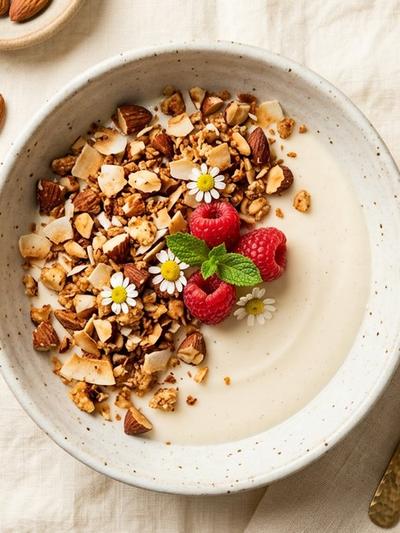
Serve. Ladle the kheer into four small bowls or cups. Top each serving generously with the toasted pistachio and coconut mixture. Serve warm immediately, or let the kheer cool to room temperature, then cover and refrigerate for at least 2 hours for a chilled dessert. The kheer will thicken further as it cools — this is normal and desirable.
Nutrition per Serving
| Nutrient | Amount |
|---|---|
| Calories | ~295 kcal |
| Fat | ~27g |
| Protein | ~5g |
| Total Carbs | ~10g |
| Fiber | ~5g |
| Net Carbs | ~5g |
Nutrition values are approximate and based on the stated ingredients. Actual values may vary depending on specific brands of coconut cream and sweetener used.
Tips & Variations
Choose the right coconut cream. Not all canned coconut products are equal. Look for full-fat coconut cream (not "lite" or "light") with no added sugar. Brands like Aroy-D and Thai Kitchen work well. The fat content should be at least 20g per 100ml — this is what gives the kheer its luxurious richness and keeps the macro ratio solidly ketogenic.
Sweetener matters for texture. Granulated monk fruit sweetener dissolves best in this warm application, producing a smooth result. Powdered erythritol also works beautifully. Avoid liquid stevia as the sole sweetener here — it can taste bitter at the concentration needed to sweeten the full batch. If you prefer stevia, use 5 to 8 drops alongside 2 tablespoons of granulated monk fruit for balanced sweetness without any cooling aftertaste.
Make it a richer dessert. For an extra-decadent version, stir 2 tablespoons of almond butter or cashew butter into the warm kheer at step 7. This adds roughly 100 calories and 9 grams of fat per serving while bumping the protein to about 8 grams — turning this into a more substantial post-dinner treat.
Serve it two ways. Warm kheer has a thinner, more soup-like consistency reminiscent of traditional Indian kheer served at festivals. Chilled kheer sets up thicker and spoonable, almost like a chia pudding. Both are delicious — try it warm the first night, then enjoy leftovers cold from the fridge the next day for two completely different dessert experiences.
Watch for hidden carbs in toppings. While this recipe keeps net carbs at 5 grams per serving, it is easy to accidentally increase the count. Avoid topping with dried fruits (raisins, cranberries), which are common in traditional kheer but very high in sugar. Stick with nuts, seeds, unsweetened coconut, and a few raw cacao nibs if you want variety.