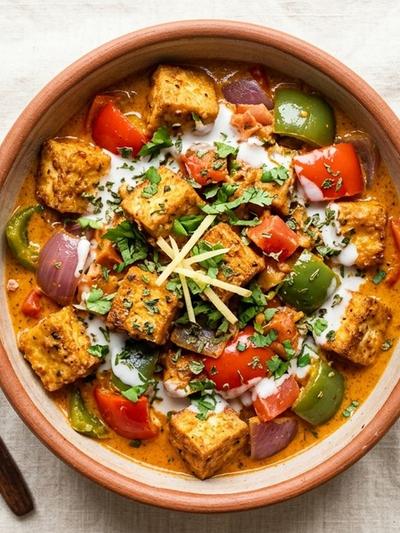
Tikka masala is one of the most popular curry dishes in the world, and this cauliflower version brings it firmly into vegan keto territory. Cauliflower florets are roasted until caramelized and slightly charred, then simmered in a rich, spiced tomato sauce made creamy with coconut cream instead of dairy. At 8g net carbs per serving, this dish packs all the warmth and complexity of a traditional tikka masala without any animal products or excessive carbohydrates. The roasting step is what sets this recipe apart — it transforms the cauliflower from bland to deeply flavourful, giving it a nutty, slightly smoky character that stands up beautifully to the bold masala sauce.
Why This Works on Keto
Cauliflower is the undisputed vegetable champion of keto, with just 3g net carbs per 100g and an impressive nutritional profile including vitamin C, vitamin K, and folate. The tikka masala sauce uses coconut cream for richness instead of dairy, making it both vegan and high in healthy fats. The spice blend — garam masala, cumin, coriander, turmeric — adds layers of flavour without any carbs, keeping this dish intensely satisfying at a very modest carbohydrate cost.
Ingredients
For the roasted cauliflower
- 1 large cauliflower (about 600g), cut into florets
- 15ml olive oil
- 5g ground cumin
- 3g ground turmeric
- 3g smoked paprika
- Salt to taste
For the tikka masala sauce
- 15ml coconut oil
- 1 medium onion (100g), finely diced
- 4 cloves garlic, minced
- 15g fresh ginger, grated
- 1 green chili, finely chopped
- 400g canned crushed tomatoes
- 120ml coconut cream
- 5g garam masala
- 3g ground coriander
- 2g ground cumin
- 2g ground turmeric
- 2g smoked paprika
- Salt to taste
- Fresh cilantro for garnish
Instructions
- Preheat the oven to 220C (425F). Toss the cauliflower florets with olive oil, cumin, turmeric, smoked paprika, and salt on a large baking sheet. Spread in a single layer.
- Roast for 25 minutes, flipping once halfway through, until the florets are golden brown and slightly charred on the edges.
- While the cauliflower roasts, prepare the sauce. Heat the coconut oil in a large pan over medium heat. Add the diced onion and cook for 5-6 minutes until soft and lightly golden.
- Add the garlic, ginger, and green chili. Saute for 1 minute until fragrant.
- Stir in the garam masala, ground coriander, cumin, turmeric, and smoked paprika. Cook for 30 seconds to toast the spices.
- Pour in the crushed tomatoes and stir well. Simmer for 12-15 minutes, stirring occasionally, until the sauce thickens and the oil begins to separate around the edges.
- Stir in the coconut cream and simmer for another 3 minutes until the sauce is rich and creamy.
- Add the roasted cauliflower to the sauce and gently fold to coat. Simmer together for 5 minutes so the flavours meld.
- Season with salt to taste and garnish with fresh cilantro before serving.
Tips & Variations
- Extra protein: Add a can of drained chickpeas if your carb budget allows, or stir in cubed firm tofu for a vegan protein boost.
- Richer sauce: Blend half the sauce until smooth before adding the cauliflower for a creamier, more restaurant-style consistency.
- Spice level: Adjust the heat by adding or removing the green chili. For a smoky kick, add a pinch of cayenne pepper.
- Batch cooking: The sauce freezes beautifully for up to 3 months. Roast the cauliflower fresh when you are ready to eat for the best texture.