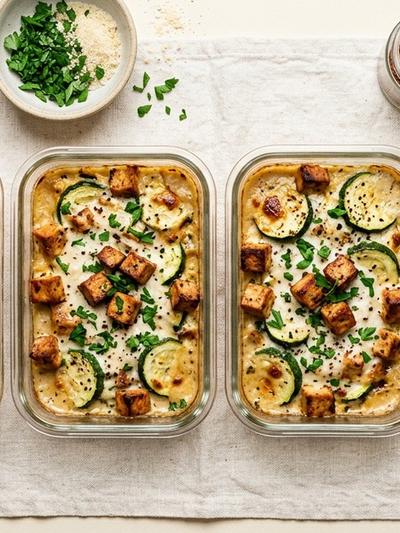
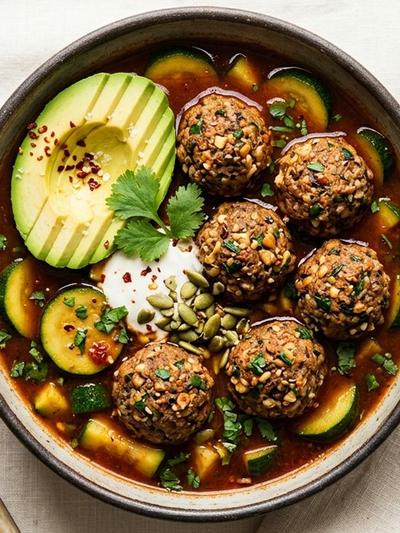
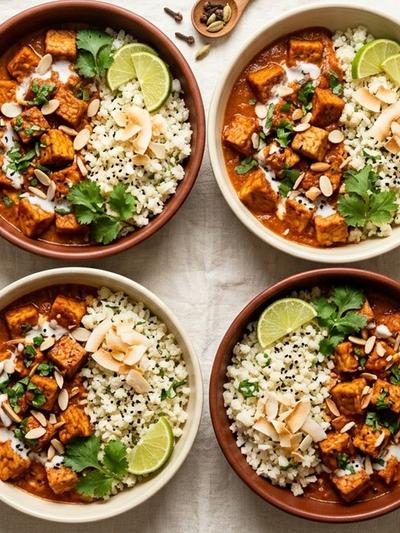
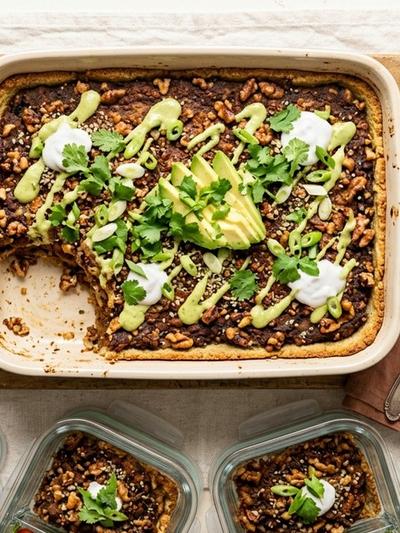
Imagine splitting open a meal-prep container at your desk and being hit with the warm, earthy perfume of ancho chiles folded into thick coconut cream. That is what these bowls deliver, day after day. Golden-seared tofu cubes sit in a velvety, rust-colored sauce that clings to every edge, while a bright pepita-avocado salsa drops in with cool crunch and a hit of lime. The toasted shredded coconut scattered on top seals the deal with a whisper of sweetness that pulls every layer together.
Each serving packs roughly 50 grams of fat and only 9 grams of net carbs, landing squarely in the keto sweet spot. The fat comes from three different forms of coconut plus avocado and pepitas, so it feels indulgent without any dairy at all. Tofu rounds out the protein at 19 grams per bowl, enough to keep you focused through the afternoon without that post-lunch crash.
Best of all, the braised tofu and sauce actually improve overnight as the chiles steep deeper into the coconut cream. Spend 45 minutes on a Sunday and you walk away with four lunches that reheat in minutes. Toss the containers in your bag, slice some avocado when you are ready to eat, and lunch is solved for the week.
Ingredients (serves 4)
For the Coconut-Ancho Braised Tofu:
- 16 oz (450g) extra-firm tofu, pressed and cut into 3/4-inch (2cm) cubes
- 1 can (13.5 oz / 400ml) full-fat coconut cream
- 2 tablespoons (28g) coconut oil, divided
- 1 tablespoon ancho chile powder
- 1 teaspoon ground cumin
- 1/2 teaspoon smoked paprika
- 1/2 teaspoon dried Mexican oregano
- 1 small poblano pepper, seeded and diced (about 3/4 cup / 70g)
- 2 cloves garlic, minced
- 1 tablespoon (15ml) fresh lime juice
- 1/2 teaspoon fine sea salt
- 1/4 teaspoon freshly ground black pepper
For the Pepita-Avocado Salsa:
- 1 large ripe avocado, diced (about 3/4 cup / 150g)
- 1/4 cup (30g) raw pepitas (pumpkin seeds), lightly toasted
- 1 small jalapeño, seeded and finely minced
- 2 tablespoons fresh cilantro, roughly chopped
- 1 tablespoon (15ml) fresh lime juice
- 1/4 teaspoon fine sea salt
For the Bowls:
- 6 cups (180g) baby spinach
- 1 tablespoon (14g) coconut oil
- 2 tablespoons (10g) unsweetened shredded coconut, toasted
- Lime wedges, for serving
Instructions
Press the tofu. Remove the tofu from its package and drain all liquid. Wrap the block in two layers of clean kitchen towels or several sheets of paper towels. Set a heavy cutting board, cast-iron skillet, or a stack of plates on top and press for at least 15 minutes. Unwrap, cut into 3/4-inch (2cm) cubes, and pat each piece completely dry.
Sear the tofu. Heat 1 tablespoon of the coconut oil in a large skillet or Dutch oven over medium-high heat until the oil shimmers. Arrange the tofu cubes in a single layer with space between each piece. Cook undisturbed for 3 to 4 minutes until the bottoms turn deep golden brown. Flip and sear the second side for another 3 minutes. Transfer the tofu to a plate and set aside.
Build the sauce base. Reduce the heat to medium. Add the remaining 1 tablespoon of coconut oil to the same skillet. Add the diced poblano and cook for 3 to 4 minutes, stirring occasionally, until the edges just begin to soften. Add the minced garlic and stir for 30 seconds until fragrant. Sprinkle in the ancho chile powder, cumin, smoked paprika, and Mexican oregano. Toast the spices for 30 seconds, stirring constantly so they bloom without burning.
Braise the tofu. Pour the entire can of coconut cream into the skillet and stir well, scraping up any browned bits clinging to the bottom. Bring the sauce to a gentle simmer. Return the seared tofu to the skillet and nestle the cubes into the sauce. Reduce the heat to medium-low and let it simmer uncovered for 10 to 12 minutes, stirring gently every few minutes, until the sauce thickens enough to coat the back of a spoon and clings to the tofu. Remove from heat and stir in the lime juice, salt, and black pepper. Taste and adjust seasoning.
Wilt the spinach. In a separate skillet, heat 1 tablespoon of coconut oil over medium heat. Add the baby spinach in two or three batches, turning with tongs until each handful just wilts, about 1 to 2 minutes total. Season with a small pinch of salt. If any liquid pools in the pan, tilt and drain it off.
Toast the coconut. Spread the shredded coconut in a small dry skillet over medium-low heat. Stir continuously for 2 to 3 minutes until the shreds turn golden and smell fragrant. Remove from the heat immediately, since coconut burns quickly.
Prepare the salsa. In a small bowl, gently fold together the diced avocado, toasted pepitas, minced jalapeño, cilantro, lime juice, and salt. Press a piece of plastic wrap directly against the surface if not serving immediately.
Assemble and store. Divide the wilted spinach among 4 airtight meal-prep containers. Spoon the braised tofu and sauce evenly on top. If you plan to eat a portion within 1 to 2 days, add the pepita-avocado salsa directly into that container. For portions you will eat later in the week, store the salsa separately in a small sealed container and add it fresh when serving. Scatter toasted shredded coconut over each bowl. Seal the containers and refrigerate for up to 5 days.
To reheat and serve. Microwave each container for 2 to 3 minutes until heated through, or warm the tofu and spinach together in a skillet over medium heat for 4 to 5 minutes. Top with the pepita-avocado salsa, a squeeze of fresh lime, and any extra cilantro you have on hand.
Nutrition per Serving
| Nutrient | Amount |
|---|---|
| Calories | ~550 kcal |
| Fat | ~50g |
| Protein | ~19g |
| Total Carbs | ~15g |
| Fiber | ~6g |
| Net Carbs | ~9g |
Nutrition is approximate and based on the stated ingredients and 4 servings. Actual values may vary by brand of coconut cream and tofu.
Tips & Variations
Toast pepitas ahead for deeper flavor and faster assembly. Spread raw pepitas in a dry skillet over medium heat and stir constantly for 3 to 4 minutes until they begin to pop and turn golden. That toasting step unlocks a nutty richness that elevates the salsa from simple to special. Make a large batch and store them in an airtight jar at room temperature for up to two weeks.
Keep the avocado salsa separate for multi-day storage. Avocado browns within a day once it is mixed and exposed to air. For the freshest results across a full work week, store the braised tofu and spinach in sealed containers and prepare the avocado salsa each morning. Alternatively, make it the night before with an extra squeeze of lime juice and press plastic wrap flush against the surface.
Swap ancho chile powder for guajillo or pasilla. If ancho is unavailable, guajillo chile powder delivers a brighter, slightly fruitier heat while pasilla adds deeper, chocolatey notes. Any single-origin Mexican chile powder keeps the dish authentic without affecting carbs. Avoid generic supermarket "chili powder" blends, which often contain cornstarch, sugar, or other fillers that raise the carb count.
Read coconut cream labels to dodge hidden carbs. Not every can is equal. Some brands add cane sugar, guar gum, or thickeners that quietly push carbs higher. Choose a can that lists only coconut extract and water, ideally showing 1 to 2 grams of carbs per 100 milliliters. Brands like Aroy-D and Native Forest are reliable choices for clean-label coconut cream.
Double the braised tofu for a full five-day rotation. This recipe scales without any fuss. Use two blocks of tofu, two cans of coconut cream, and a wider Dutch oven. The sauce thickens further in the fridge and the spices deepen overnight, so the last portions of the week often taste even better than the first.